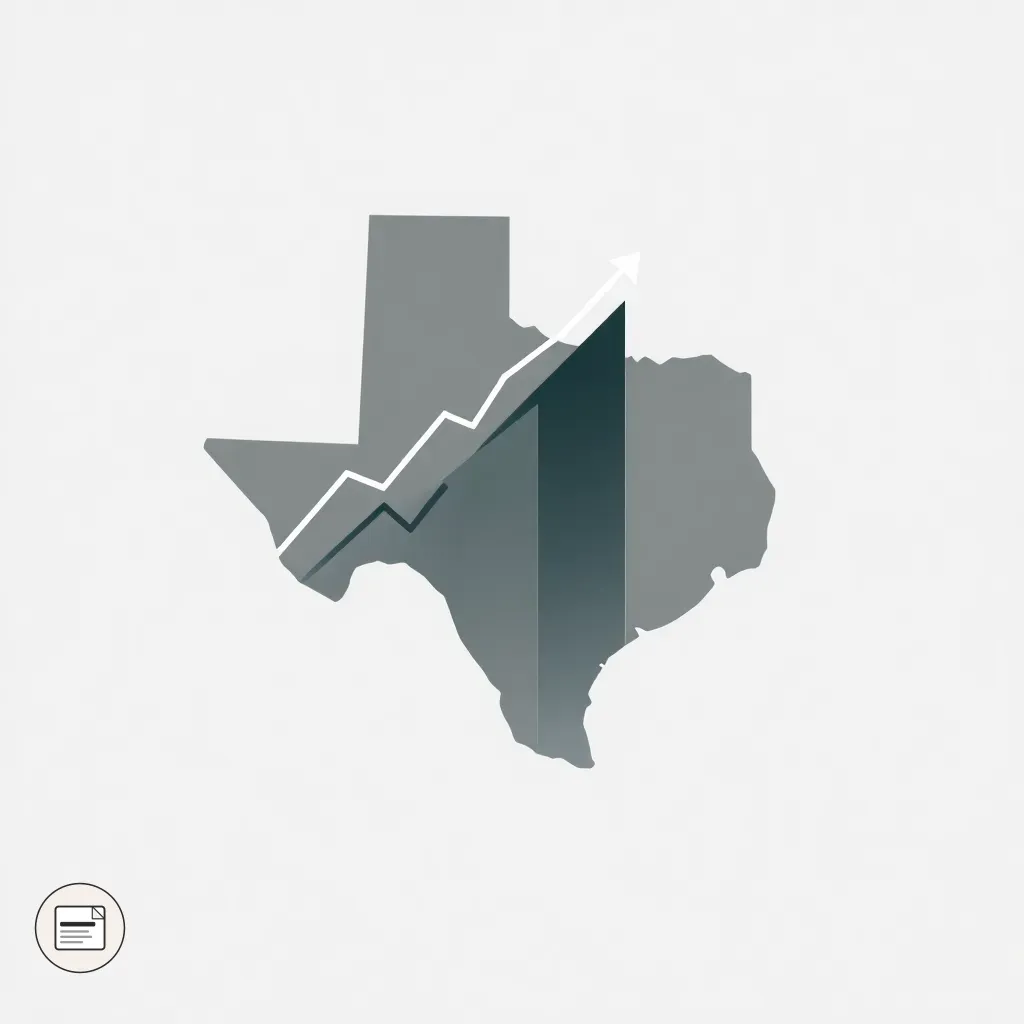
The headlines are starting to shift. We're seeing reports, like the one from Texas Border Business, talking about the Texas housing market moving toward stability amid slower growth. For many, 'slower growth' sounds like a red flag, a signal to pull back, or a reason to wait on the sidelines. But for the operator who understands the fundamentals of distressed real estate, it's a different kind of signal entirely.
This isn't about market timing; it's about market understanding. When the general market cools, two things happen: first, the frantic bidding wars subside, and second, the underlying issues that create distressed opportunities become clearer, not obscured by artificial appreciation. This 'stability' isn't a retreat; it's a return to a more rational environment where disciplined acquisition strategies truly shine. It means the market is less forgiving of sloppy due diligence and more rewarding for those who know how to identify and solve problems.
**The Real Opportunity in a Stabilizing Market**
When the market isn't climbing 20% year-over-year, the noise dies down. This is precisely when the pre-foreclosure market becomes even more fertile ground. Why? Because the homeowners facing distress aren't suddenly saved by rapid equity appreciation. Their problems—job loss, medical emergencies, divorce, bad tenants, or simply poor financial planning—don't disappear. In fact, slower growth can exacerbate these issues for those already on the edge, pushing more properties into pre-foreclosure.
"A stable market forces investors to be better investors," notes Sarah Chen, a seasoned real estate analyst based in Dallas. "You can't rely on the tide lifting all boats anymore. You have to actively hunt for value, and that value is often found in situations, not just properties."
Your focus, then, shifts from speculating on future appreciation to solving immediate problems. This is the core of pre-foreclosure investing. You're not betting on the market; you're betting on your ability to provide a solution to a homeowner in crisis, acquire an asset at a discount, and execute a clear resolution path.
**Sharpening Your Acquisition Edge**
In a market characterized by 'slower growth,' your ability to identify, qualify, and engage with distressed homeowners becomes paramount. This means moving beyond generic outreach and understanding the specific triggers that lead to pre-foreclosure. It means mastering the art of the conversation – not sounding desperate or pushy, but genuinely empathetic and solution-oriented.
For example, consider the Charlie 6, our deal qualification system. In a fast market, some might cut corners on a few of those diagnostic points, hoping appreciation covers their mistakes. In a stable market, adhering to every step of the Charlie 6 becomes non-negotiable. You need to know the true condition, the real equity position, the homeowner's true motivation, and the precise foreclosure timeline. This level of precision protects your capital and ensures you're acquiring deals with built-in profit, not just hoping for market recovery.
Furthermore, your understanding of the Five Solutions you can offer a homeowner—from a direct cash purchase to a short sale or even helping them sell on the open market—becomes critical. The more options you can genuinely present, the higher your conversion rate. This isn't about being a salesperson; it's about being a problem-solver. "The best deals in a stable market are often the ones where you've provided the most comprehensive solution to a homeowner," says Mark Johnson, a long-time investor in Houston. "It's about trust and transparency, not just price."
**The Path Forward: Discipline and Structure**
Don't let headlines about 'slower growth' deter you. They should, instead, galvanize you to become a more disciplined operator. This is the market where structured processes, clear communication, and a deep understanding of the pre-foreclosure lifecycle pay dividends. It's where the operators who truly understand how to fix the frame and then execute tactics will thrive.
The full deal qualification system is inside [The Wilder Blueprint Core](https://wilderblueprint.com/core-registration/) — six modules built for operators who are ready to move.