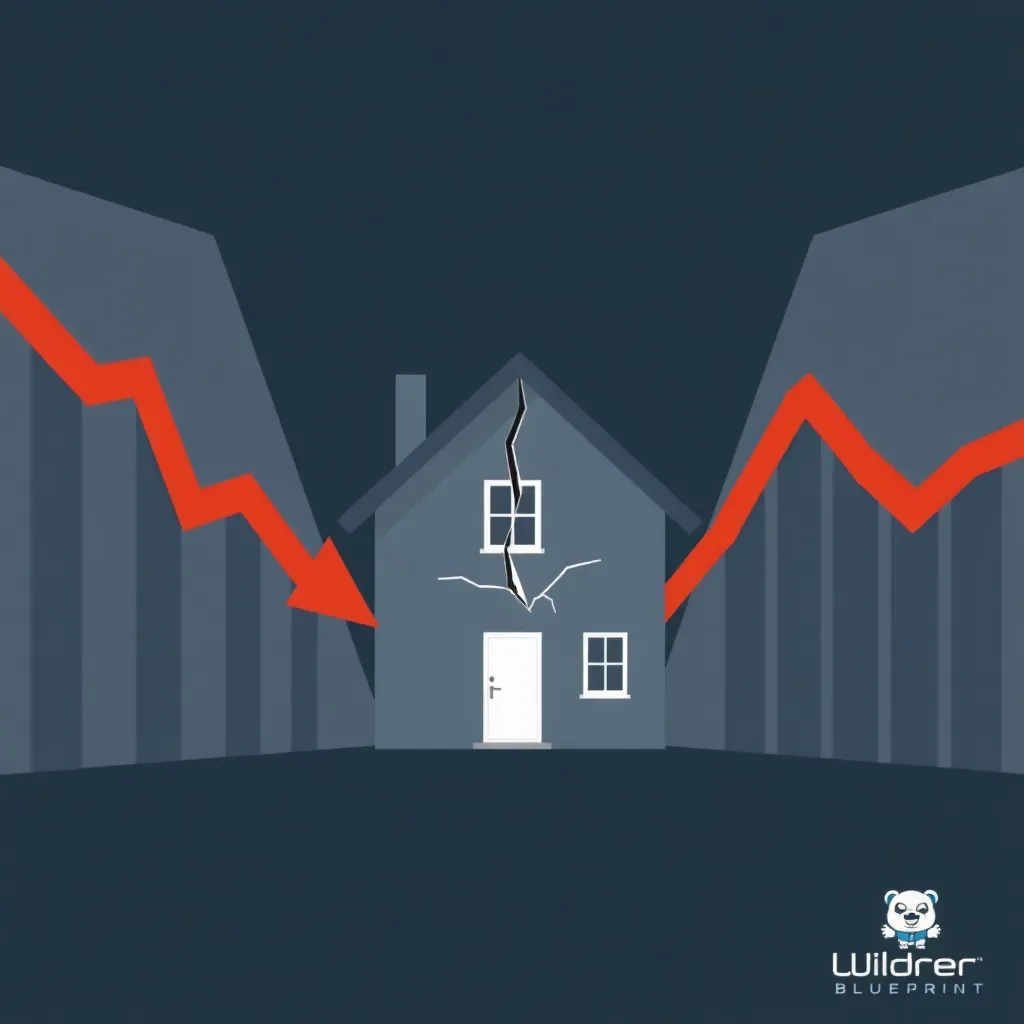
When you hear terms like 'slower growth' or 'market stability' applied to housing, many operators instinctively brace for impact. They see it as a signal to pull back, to wait for the next boom. But that’s a reactive stance, and it misses the fundamental truth of this business: opportunity rarely announces itself with a ticker-tape parade.
Texas, a state often synonymous with rapid expansion, is now seeing its housing market transition. The frenetic pace of recent years is moderating, and while some interpret this as a cooling, I see it as the market recalibrating. For the operator paying attention, this isn't a signal to retreat; it's an invitation to lean in and apply a more disciplined approach.
Rapid appreciation can mask a lot of sins. When every house sells for more than the last, it’s easy to get lazy with your numbers, to ignore the true cost of acquisition or the nuances of a property's condition. A stable or slower-growth market strips away that illusion. It forces you to be a better operator, to understand value, and to execute with precision. This is where the real work, and the real profit, happens for those who know how to find it.
Consider the distressed property landscape in a market like Texas. Even with overall stability, individual homeowners face life events that create distress: job loss, divorce, medical emergencies, or simply inheriting a property they can't manage. These situations don't disappear because the market isn't appreciating at 20% year-over-year. In fact, a slower market can sometimes exacerbate these issues, as homeowners might find it harder to sell quickly on the retail market without significant price cuts.
This is your opening. The shift in market dynamics means less competition from casual buyers and more homeowners looking for a fast, fair, and discreet solution. Your ability to provide that solution, without sounding desperate or like you just discovered YouTube, becomes even more valuable. It’s about being the professional who can assess a situation, offer a clear path forward, and close the deal efficiently.
### Finding Value in a Stable Market
In a market moving toward stability, your deal qualification becomes paramount. This isn't the time to chase every lead. It's the time to double down on your diagnostic skills. For us, that means leaning on systems like the Charlie 6, which allows you to qualify a pre-foreclosure deal in minutes. You're looking for the right combination of property condition, equity, and seller motivation. A stable market simply makes the equity component more predictable, removing some of the speculative froth.
“The real opportunity isn't in market booms, but in market clarity,” notes Sarah Jenkins, a veteran real estate analyst in Austin. “When the noise of rapid appreciation settles, the underlying value of distressed assets becomes much clearer for those who know how to assess it.”
Your focus should be on properties where you can add tangible value. This might be through strategic renovations, resolving title issues, or simply providing a quick, all-cash offer that bypasses the traditional selling process. The Five Solutions framework — understanding how to offer various options beyond just a cash purchase — becomes critical. You might be solving a problem for a homeowner who needs to sell quickly but doesn't have the capital for repairs, or one who needs to navigate a complex probate situation.
### The Operator's Advantage
This market shift isn't a threat; it's a filter. It filters out the dabblers and rewards the disciplined operators. It's about understanding that 'slower growth' doesn't mean 'no growth' or 'no opportunity.' It means the opportunity has moved from broad market appreciation to targeted problem-solving. This requires a different kind of skill set, one focused on identifying distress, building rapport, and executing a clear resolution path.
“A stable market forces investors to become true operators, not just speculators,” says Mark Chen, a long-time investor in Dallas. “You have to know your numbers, understand your rehab costs, and be able to articulate a clear value proposition to a distressed seller. The days of simply buying anything and waiting for appreciation are behind us, and that's a good thing for serious players.”
This is where your system, your structure, and your ability to show up as a professional — not a predator — will differentiate you. While others are waiting for the next boom, you'll be acquiring assets and building wealth, one solved problem at a time.
The full deal qualification system is inside [The Wilder Blueprint Core](https://wilderblueprint.com/core-registration/) — six modules built for operators who are ready to move.