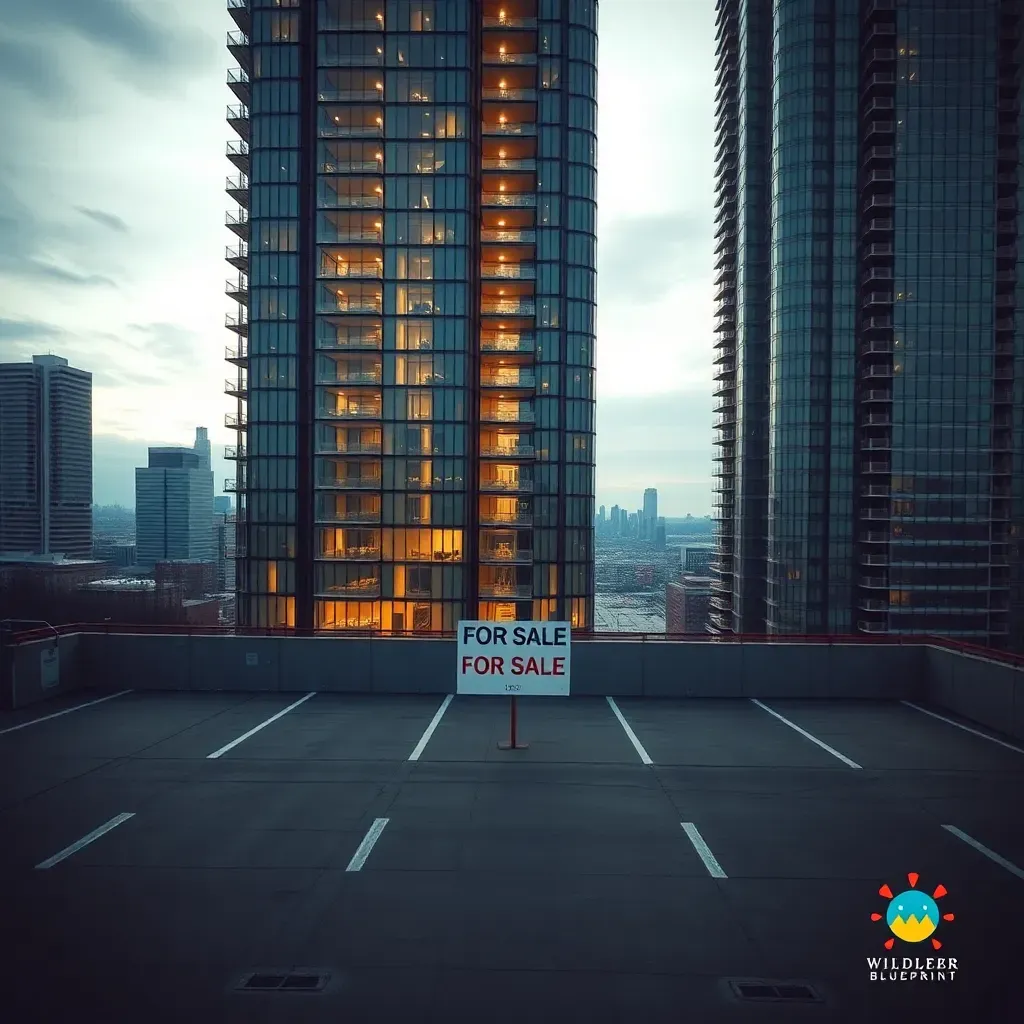
You see the headlines: "Developers plan luxury apartments on foreclosed Seattle parking lot." Most people read that and think, "Good for them." A few might wonder how a parking lot ends up foreclosed. But the operator, the one who understands how this business works, sees something else entirely: a blueprint.
This isn't just a story about a parking lot in Seattle. It's a clear, undeniable signal about where real value is being created in distressed real estate. While others chase the obvious, the smart money is looking for the raw materials — the underutilized, the mismanaged, the foreclosed — and applying a vision.
What does a foreclosed parking lot tell you? It tells you that someone, somewhere, failed to manage an asset. It tells you there was a problem, a debt, a missed payment, or a strategic misstep that led to the property being taken back. This isn't a unique situation; it's the fundamental dynamic of the distressed market. Every foreclosure, whether it's a single-family home or a commercial parcel, represents a problem that needs a solution. And for the operator who understands that, it represents opportunity.
### The Operator's Lens: Beyond the Obvious
Most investors fixate on residential foreclosures, and for good reason—they're plentiful, and the process is relatively standardized. But the market for distressed assets is far broader. Commercial properties, land parcels, and even seemingly mundane assets like parking lots can hold immense potential. The key is to look beyond the current use and understand the *highest and best use* of the property, especially when it's acquired at a discount through foreclosure.
When a property like a parking lot goes into foreclosure, it's often because the original owner couldn't service the debt, or the underlying business model failed. This creates a situation where the property can be acquired below market value, sometimes significantly so. For a developer with a clear vision and access to capital, that foreclosed parking lot isn't just asphalt and painted lines; it's a blank canvas in a desirable location. It’s an opportunity to create something new, something that generates substantial revenue, like luxury apartments.
"The real skill isn't just finding a foreclosed property, it's seeing what it *could be*," says Sarah Chen, a commercial real estate analyst based in Portland. "A parking lot in a growing urban core, acquired through foreclosure, is often a steal. The existing use is low-value, but the land itself is gold."
### Identifying Undervalued Assets
How do you find these opportunities? It starts with data and a disciplined approach. Just as you'd analyze a pre-foreclosure home for its potential ARV (After Repair Value), you need to assess commercial and land assets for their development potential. This involves understanding zoning regulations, market demand for different property types, and the cost of construction.
"We often look for properties with outdated zoning or underutilized space," notes Mark Jensen, a veteran developer specializing in urban infill projects. "A foreclosed industrial lot in a transitioning neighborhood, or even a small commercial building with excess land, can be a prime candidate for redevelopment. The foreclosure process often strips away the emotional attachment and allows for a pure economic assessment."
This isn't about chasing every foreclosed property. It's about applying a diagnostic framework to quickly assess potential. Think of it like the Charlie 6 for commercial assets: location, zoning, market demand, environmental considerations, access to utilities, and acquisition cost relative to development potential. If these align, you have a viable project. If they don't, you walk. This disciplined approach prevents you from getting bogged down in deals that won't pencil out.
### The Path Forward for Operators
The lesson from Seattle is clear: the distressed market offers opportunities far beyond what most people consider. It rewards those who are willing to look deeper, to understand the underlying value of land and location, and to apply a strategic vision. This isn't about luck; it's about structure, truth, and execution.
Whether you're looking at a single-family home or a commercial lot, the principles remain the same: find the problem, understand the asset's true potential, and execute a solution. The ability to identify these undervalued assets and navigate the acquisition process is what separates the serious operator from the enthusiast.
Start with the foundations at [The Wilder Blueprint](https://wilderblueprint.com/foundations-registration/) — the entry point for serious distressed property operators.