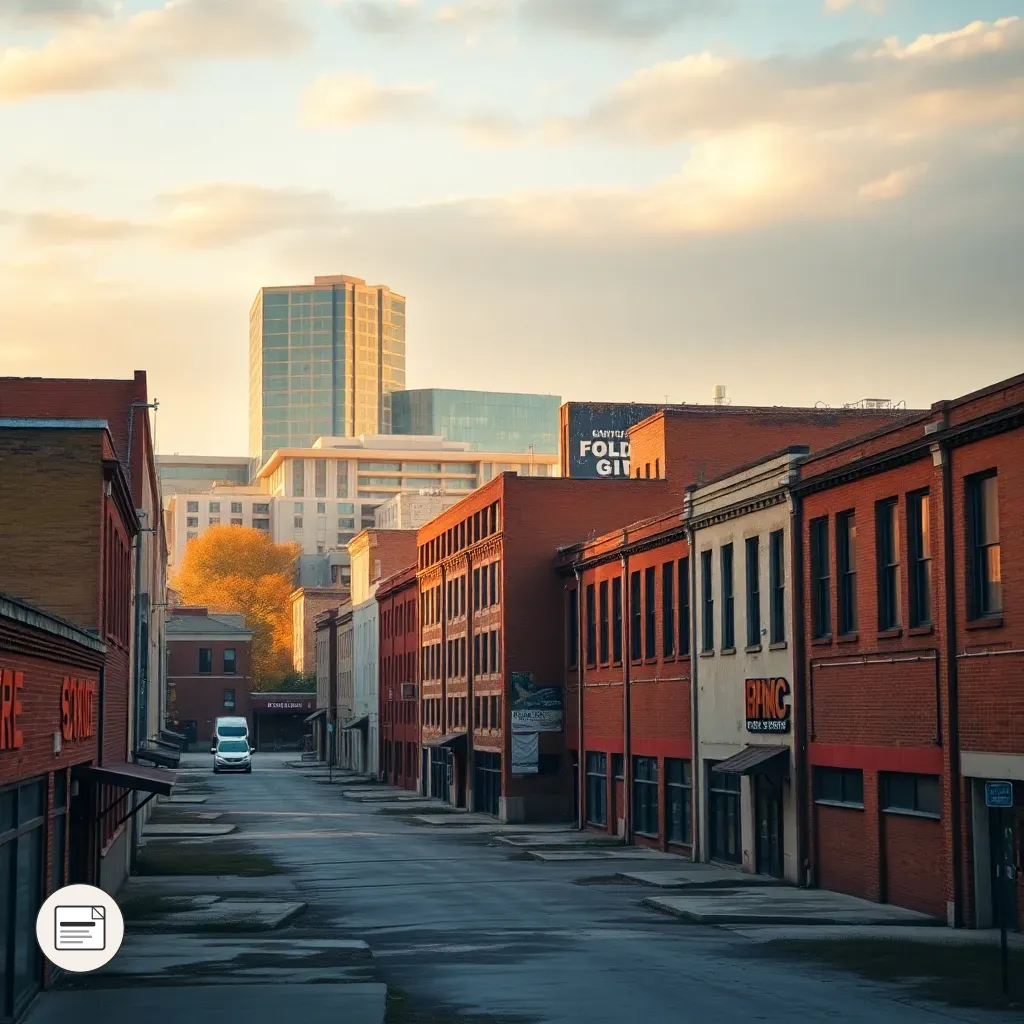
You see the headlines: "Tulane University to build new housing at the site of staple Uptown diner." On the surface, it’s a local news story about a beloved diner closing and a university expanding. But for the operator paying attention, this isn't just about a single property; it's a clear signal about market dynamics and where capital is flowing.
Major institutions — universities, hospitals, large corporate campuses — are predictable engines of growth and redevelopment. They need housing for students and staff, facilities for research, and infrastructure to support their operations. This isn't speculative development; it's strategic, long-term expansion driven by deep pockets and a clear mission. When a university announces a new project, it's not just building one thing; it's signaling a commitment to an entire area, often for decades.
This commitment creates a ripple effect. Property values in the immediate vicinity and along key transportation corridors tend to appreciate. Demand for rental housing, retail, and services increases. For the distressed property operator, this isn't just a general market trend; it's a pinpointed opportunity. You're looking for properties that are currently undervalued, underperforming, or in pre-foreclosure, but are sitting squarely in the path of this institutional growth.
The challenge, as always, is identifying these properties and acquiring them before the broader market catches on. This requires a disciplined approach to sourcing and qualification. You're not just looking for any distressed property; you're looking for a distressed property with a specific, predictable tailwind. This is where your local knowledge and your ability to read the tea leaves of institutional expansion become invaluable.
Consider the university's master plan, if available. Look at zoning changes, infrastructure projects, and public announcements. These institutions telegraph their moves. They don't just wake up one day and decide to build; these are multi-year, multi-million-dollar endeavors. Your job is to get ahead of the curve. Identify the neighborhoods adjacent to their current footprint, or areas they are likely to expand into due to land availability or strategic importance.
Once you’ve identified these target zones, your pre-foreclosure sourcing becomes even more focused. You're looking for homeowners in distress within these specific boundaries. These are often properties where the homeowner is facing financial hardship, but the underlying asset has significant hidden value due to its location. You can offer a solution to their immediate problem – avoiding foreclosure – while acquiring an asset with a built-in appreciation trajectory.
“We’ve seen this play out repeatedly in university towns,” notes Sarah Chen, a veteran real estate analyst specializing in urban redevelopment. “The institutional anchor provides a stability and growth factor that’s hard to replicate elsewhere. Smart investors aren’t just buying near the campus; they’re buying in the path of its *future* expansion.”
Your due diligence, particularly the Charlie 6 qualification system, becomes even more critical here. You're not just evaluating the property's current condition and the homeowner's situation; you're layering on the institutional growth factor. What is the likelihood of appreciation? What are the potential exit strategies – a quick flip to a new wave of buyers, or a long-term hold for rental income catering to students or faculty? The Three Buckets – Keep, Exit, Walk – become clearer when you have this kind of predictable demand.
This isn't about chasing hot markets; it's about understanding the fundamental drivers of value in specific micro-markets. University expansion is a long-term play, offering a more stable and predictable environment for distressed property investing than pure speculation. It rewards operators who do their homework, understand the local power players, and can connect with homeowners in need.
The complete 12-module system, including the Charlie 6 and all three operator tracks, is inside [The Wilder Vault](https://wilderblueprint.com/the-vault-registration/).