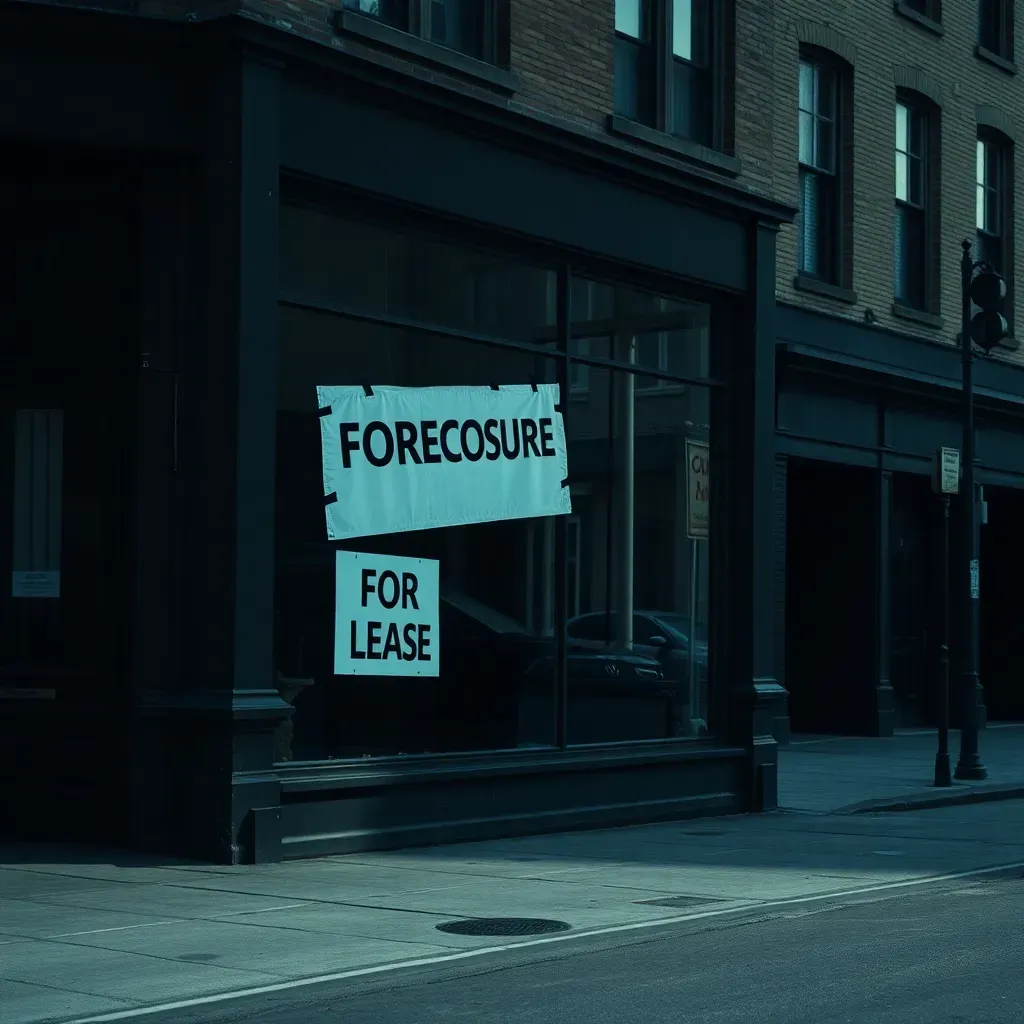
The news cycle often highlights the triumphs of large-scale development, but it's the failures that offer the most potent lessons. Recently, a major development group, the Chetrits, lost a Miami Beach hotel to foreclosure after a staggering $96 million judgment. This isn't about schadenfreude; it's about understanding that the fundamentals of distressed real estate apply to everyone, from the individual homeowner to the multi-million dollar developer.
Big numbers and high-profile names can make these situations seem distant, like they're playing a different game. But the core mechanism is the same: debt, default, and the inevitable resolution process. When a project of this scale goes sideways, it's a stark reminder that leverage, market shifts, and execution risk are constant companions in real estate. It also underscores a critical truth: distressed assets, regardless of their size or previous owner, represent an opportunity for those who understand the process and are prepared to act.
For the operator paying attention, this isn't just a headline; it's a signal. While you might not be buying a $96 million hotel, the principles of identifying, analyzing, and acquiring distressed properties are identical. The Chetrits' situation, like countless smaller foreclosures, boils down to a lender needing to recover capital and an asset needing a new owner to unlock its potential. This is where your focus should be.
"The market doesn't care about your reputation or past successes when debt service isn't met," notes Sarah Jenkins, a long-time distressed asset analyst. "Foreclosure is an equalizer, stripping away the glamour and leaving behind the raw opportunity for those who can solve the problem."
The key takeaway here is not to be intimidated by the scale of these events, but to recognize the underlying dynamics. A $96 million judgment means a lender is highly motivated to liquidate. While the scale is different, the motivation is the same as a bank foreclosing on a $200,000 single-family home. Both scenarios create a situation where a property can be acquired below market value, provided you have the system to assess and execute.
Your advantage isn't deep pockets; it's discipline, structure, and the ability to move without the emotional baggage of the previous owner. While the Chetrits were likely dealing with complex capital stacks and institutional lenders, the process of pre-foreclosure outreach, negotiation, and due diligence remains paramount. You need to understand the lien position, the timeline, and the true value of the asset. This is where a robust diagnostic system, like the Charlie 6, becomes invaluable — allowing you to quickly qualify a deal, whether it's a small residential property or a commercial asset, and determine its viability.
Think about what happens after a judgment like this. The lender is now in the business of asset recovery, not hotel management. They want to minimize losses and move on. This creates a window for strategic acquisition. "Every foreclosure, big or small, is a problem for someone else and a potential solution for a savvy investor," says Michael Chen, a veteran commercial real estate investor. "The challenge is having the framework to identify which problems you can profitably solve."
Your focus should be on building the systems that allow you to operate effectively in this environment. This includes understanding the various resolution paths available, from working directly with the homeowner or developer in pre-foreclosure, to navigating the auction process, or acquiring REO assets from institutional sellers. The bigger the asset, often the more complex the capital structure, but also potentially the larger the margin for error and profit if you know how to untangle it.
Don't let the scale of a $96 million foreclosure distract you from the fundamental opportunity. Instead, let it reinforce the idea that distressed real estate is a consistent, reliable source of deals, irrespective of the market's broader health or the size of the asset. The principles of smart acquisition, due diligence, and problem-solving are universal.
Start with the foundations at The Wilder Blueprint — the entry point for serious distressed property operators.