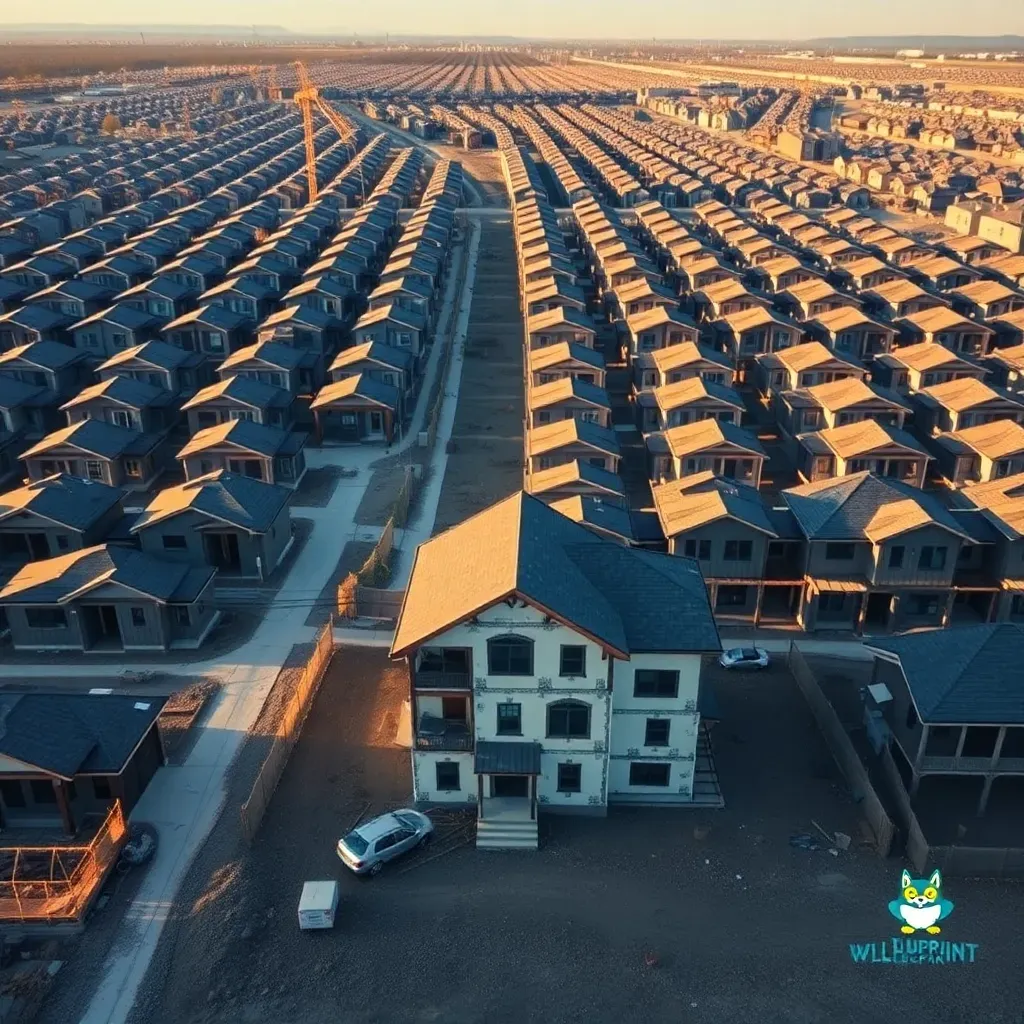
News recently broke about HUD investigating a Washington state housing program. While the specifics of the allegations are still unfolding, the core takeaway for any serious operator is clear: government-backed housing initiatives, no matter how well-intentioned, are complex and often fraught with inefficiencies and oversight challenges. This isn't a critique of the programs themselves, but an observation of how they operate in the real world.
For those of us in distressed real estate, these headlines are more than just news; they're indicators. They point to systemic issues in the broader housing market – issues that often create the very opportunities we specialize in. When large-scale, top-down solutions falter or come under scrutiny, the need for agile, bottom-up solutions becomes even more pronounced. It reinforces the truth that asset-based strategies, focused on individual properties and homeowner situations, remain the most reliable path to creating value and solving problems.
### The Real Opportunity When Systems Falter
Adam Hayes, a seasoned real estate analyst, recently observed, "Government programs, by their nature, are designed for scale, not necessarily for surgical precision. When they hit snags, it often means a vacuum opens up for private operators who can provide tailored solutions to individual property owners facing distress." This isn't about exploiting a crisis; it's about recognizing where the real work needs to be done. While HUD investigates, individual homeowners are still facing foreclosure, still needing to sell quickly, still looking for a way out.
Your job as a distressed property operator isn't to fix federal housing policy. Your job is to fix individual housing problems. When public programs face headwinds, the underlying demand for solutions to pre-foreclosures, abandoned properties, and neglected homes doesn't disappear; it often intensifies. This is where your ability to step in with a clear, structured approach becomes invaluable. You're not waiting for a government program to get its act together; you're actively creating solutions for people who need them now.
### Focusing on the Fundamentals: Your Unshakeable Advantage
This kind of news reinforces why we focus relentlessly on the fundamentals. While government programs ebb and flow, the core mechanics of distressed real estate remain constant: identify a motivated seller, understand their problem, present a viable solution, and execute. This isn't glamorous, but it's effective. It's about showing up, being disciplined, and offering a clear path forward.
Consider the Charlie 6, our deal qualification system. It doesn't care about the latest government housing program. It cares about the property's condition, the homeowner's motivation, the equity position, and the local market. These are the variables you control, the levers you can pull. When you can qualify a pre-foreclosure deal in minutes, you're building a business that is resilient to the shifting sands of policy and public oversight. You're operating on facts, not headlines.
"The market always rewards those who understand the micro-level dynamics," states Sarah Jenkins, a long-time investor specializing in troubled assets. "While the macro picture might be messy, the individual homeowner's need for a quick, fair sale remains a constant." This is your lane. This is where you become dangerous in the right way – by providing structure and truth where others see only chaos.
### Your Path Forward: Precision, Not Politics
Don't get distracted by the noise. Use these events as a reminder to sharpen your focus on what truly matters: finding distressed properties, understanding the homeowner's situation, and offering one of The Five Solutions. Your ability to navigate complex situations without sounding desperate, pushy, or like you just discovered YouTube is your competitive edge.
This business rewards structure, truth, and execution. While others are debating policy, you should be qualifying deals and helping homeowners. The full deal qualification system is inside The Wilder Blueprint Core — six modules built for operators who are ready to move.