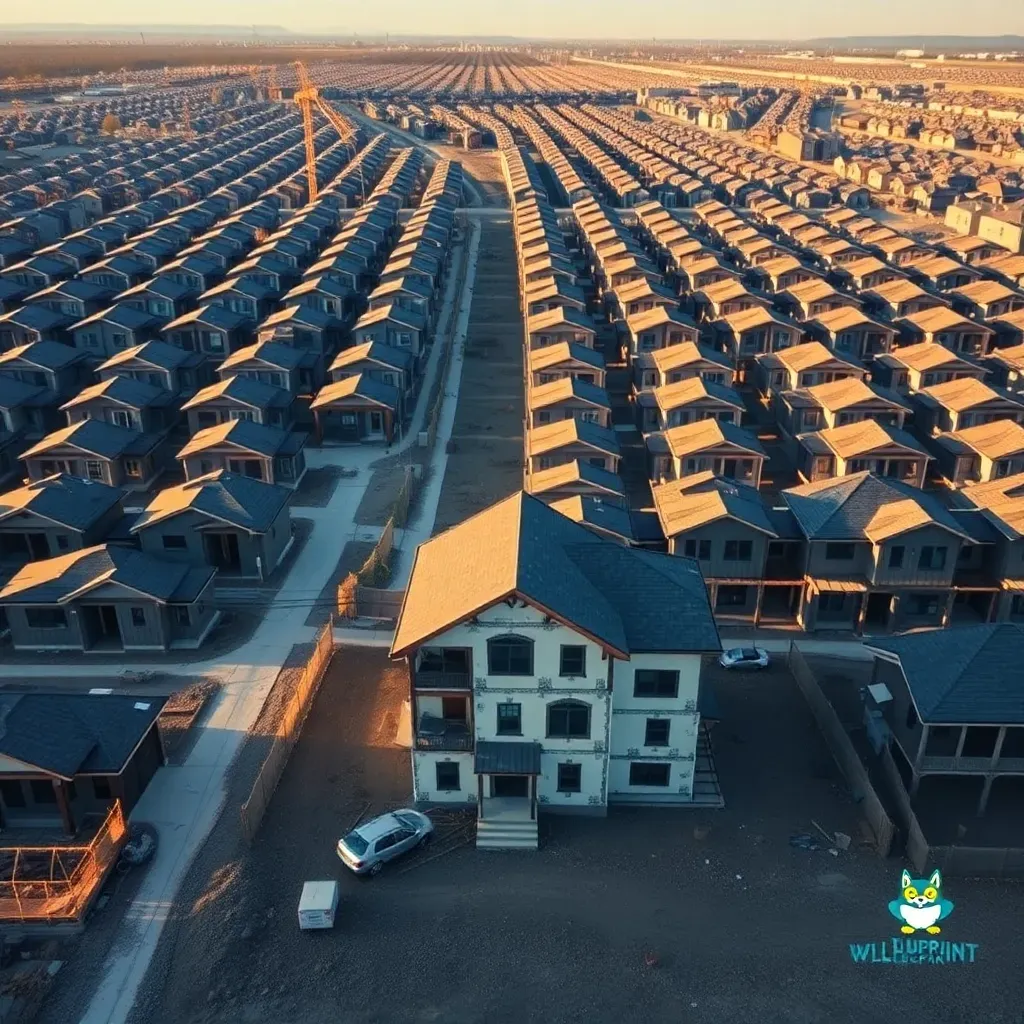
A recent announcement out of Santa Barbara County details a 4,000-unit housing project moving forward between Orcutt and Los Alamos. For many, this news might signal a flood of new inventory, increased competition, or simply a sign of market growth. But for the disciplined distressed property operator, it's a different kind of signal entirely.
When you see large-scale developments like this, don't just see new houses. See the ripple effects. See the infrastructure strain, the shifting demographics, and the inevitable pressure points that create opportunity for those who understand how to operate in the pre-foreclosure space. This isn't about competing with new builds; it's about understanding the market dynamics they create and positioning yourself to capitalize on the fallout.
Massive housing projects, while bringing new inventory, also put immense pressure on existing infrastructure. Think about it: 4,000 new homes mean thousands of new families, new cars, new demands on schools, roads, water, and local services. This often leads to a few predictable outcomes. First, property taxes in the surrounding areas can increase to fund these infrastructure improvements, squeezing homeowners on fixed incomes or those already struggling. Second, the influx of new residents can shift local employment markets, sometimes displacing existing workers or altering the demand for certain services. These are the kinds of stressors that can push a homeowner who is already on the brink into pre-foreclosure.
Consider the timeline. These projects aren't built overnight. They take years. During that construction phase, you often see increased traffic, noise, and disruption in adjacent communities. This can make existing properties less desirable for some, creating a temporary dip in perceived value or a desire for homeowners to move. This is a prime environment for you to step in with a solution. As "Sarah Chen, a veteran real estate analyst specializing in California markets," notes, "Large developments act like a magnet for both capital and people, but they also create localized turbulence. The savvy investor looks at the areas *around* the development, not just the development itself, for the real plays."
Furthermore, these developments often target a specific buyer demographic, usually those with higher incomes or access to new financing. This can leave a vacuum in the market for more affordable, existing housing. As "Mark Jensen, a long-time investor in distressed assets," points out, "When new builds suck up all the high-end demand, the middle and lower tiers of the market can get overlooked. That's where you find motivated sellers who need a quick, fair exit, not a bidding war for a new construction home."
Your job isn't to compete with these developers; it's to understand the micro-markets they create. This means paying attention to zoning changes, infrastructure plans, and demographic shifts in the areas surrounding these mega-projects. The Charlie 6 deal qualification system is designed to help you quickly diagnose these opportunities, allowing you to assess if a property in a shifting market is a Keep, Exit, or Walk. You're looking for the properties that become distressed due to the indirect effects of this growth – the homeowner who can't afford the rising taxes, the one who wants to escape the construction noise, or the one whose job market shifted.
This isn't about waiting for a market crash. It's about recognizing that growth, while generally positive, always creates pockets of inefficiency and distress. Your role is to be the disciplined operator who identifies those pockets and provides a solution, without sounding desperate, pushy, or like you just discovered YouTube.
The full deal qualification system is inside [The Wilder Blueprint Core](https://wilderblueprint.com/core-registration/) — six modules built for operators who are ready to move.